
Juzu(Jyuzu)
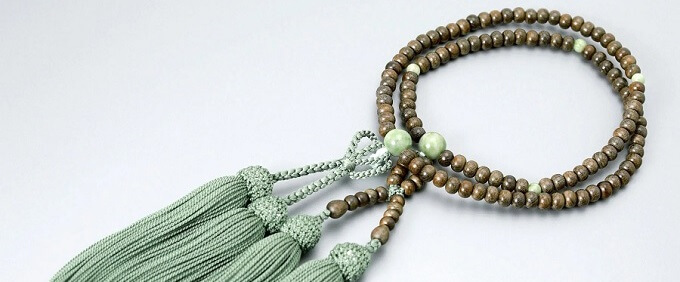
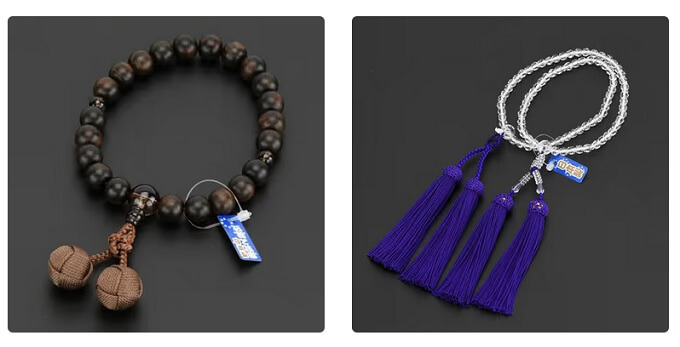
The Juzu have many uses!
Japanese rosary called juzu consists of a string of beads with holes threaded together to form a loop; some varieties also feature tassels. It is a Buddhist ritual item used by monks when chanting the Buddha's name, offering prayers, or performing exorcisms. Ordinary people also use juzu during ceremonies such as funerals. It is sometimes referred to as "nenju" rather than "juzu."
It is said that the juzu originated as an object used in ancient Indian Brahmanism and Hinduism, and that it was later introduced to China and then to Japan. It arrived in Japan during the Asuka period(about sixth century), around the same time as the introduction of Buddhism. By the Kamakura period(from 1185 to 1333), it had gradually spread among the general public as a Buddhist ritual object, not just among monks.
Currently, the juzu can be classified into two types, the formal rosary called Hon-shiki juzu and the informal rosary called Ryaku-shiki juzu. Hon-shiki juzu is a traditional rosary designed for its original purpose: to count the number of times the Buddha's name is recited. There are specific rules regarding it, which vary depending on the Buddhist sect. Although there are minor differences, it consists of 108 beads, a number said to represent the number of worldly desires.
These 108 worldly desires include ton'yoku (endless craving and clinging) and shin'ni (anger and hatred toward things that do not go as one wishes), as well as guchi (the folly of believing only myself is right). By counting these 108 worldly desires while flicking the beads with one's fingernails—one by one—they are gradually eliminated. In Japan, on New Year's Eve, temples ring the "Joyanokane" bell 108 times; it is said that this is done to rid oneself of the 108 worldly desires and welcome the New Year with a pure heart.
On the other hand, Ryaku-shiki juzu is a type of juzu that anyone can use, regardless of their Buddhist sect. It is a simplified version of Hon-shiki juzu, and most common juzu fall into this category. In the past, the number of beads was fixed—for example, 54 beads (exactly half of 108), corresponding to the number of bodhisattvas in the Vajra Realm of the 108 Deities. However, in modern times, practicality is emphasized, and there is no set number of beads.
Since Hon-shiki juzu consists of two strands, it is also called "double-strand rosaries," whereas Ryaku-shiki juzu consists of a single strand and is therefore also called "single-strand rosaries." It is also sold at more affordable prices than Hon-shiki juzu.
Furthermore, in modern times, some people wear rosary beads made from power stones as amulets, much like bracelets. Known as "juzu bracelets," these items incorporate the concept of juzu while being designed to be easily worn on a daily basis. They do not necessarily carry Buddhist significance; rather, they are characterized by their strong appeal as fashion accessories and amulets.
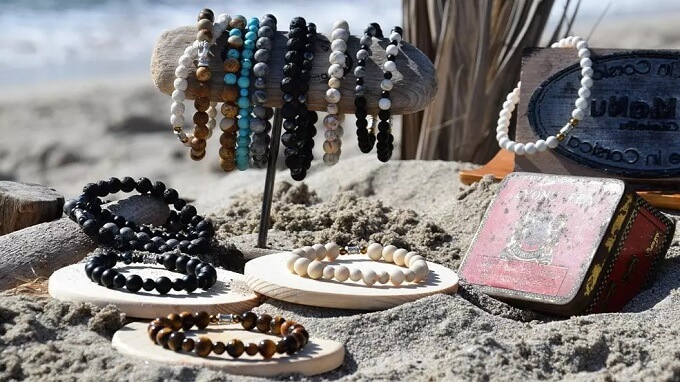
There are many different types of juzu bracelets, and their appearance and meaning vary depending on the materials and design. Juzu bracelets made with natural stones (power stones) are particularly popular, appealing to everyone from those who value their luck-bringing and talisman properties to those who simply enjoy wearing them as a fashion accessory. Each stone has its own unique color and luster, and it is said that their inherent energy is part of their appeal.
Some of the most common natural stones, along with their meanings and characteristics, include:
Tiger's Eye: A stone characterized by a powerful yellow luster, believed to enhance financial and career fortune
Onyx: A chic, solid-black stone believed to ward off evil spirits and protect against negative energy
Rose Quartz: A soft pink stone believed to enhance romantic luck and provide healing effects.
Lapis Lazuli: A stone characterized by its deep blue color and intuitive power, believed to attract good fortune.
Amethyst: A stone characterized by its calm purple color, believed to promote mental stability and physical and mental well-being.
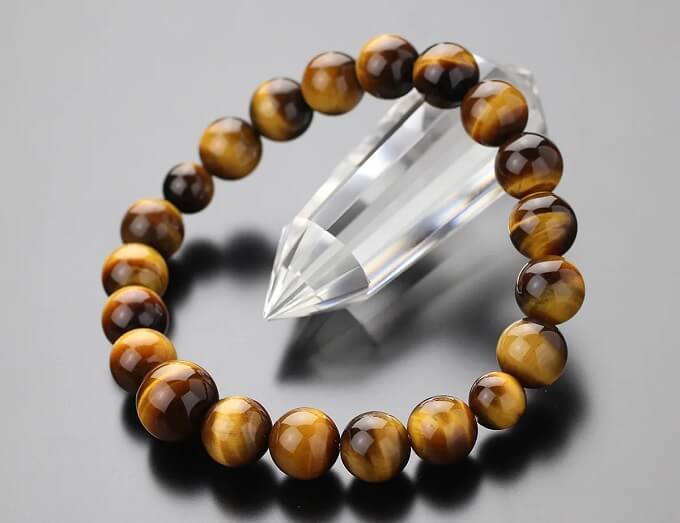
In Japan, wooden juzu bracelets with simple, elegant designs are also popular. This is because they are versatile enough to be worn both for formal occasions and as everyday accessories. Used not only as talismans but also during meditation, they allow you to feel the "warmth of natural materials."
Some of the most representative types of wood and their meanings and characteristics include:
Bodhi Tree: Known as the tree under which Buddha attained enlightenment, it is also used in traditional juzu.
Ebony: Its deep black color is beautiful and elegant, and it is said to have the power to ward off evil spirits.
Sandalwood: A wood with a subtle fragrance that has a relaxing effect.
In Japan, juzu and juzu bracelets are mainly sold at temples, and some shrines sell juzu bracelets. They are also sometimes sold at department stores and shops in tourist areas.
 Opening Lake
 April Fool's day
 Hanami
 Baseball