
Hakama
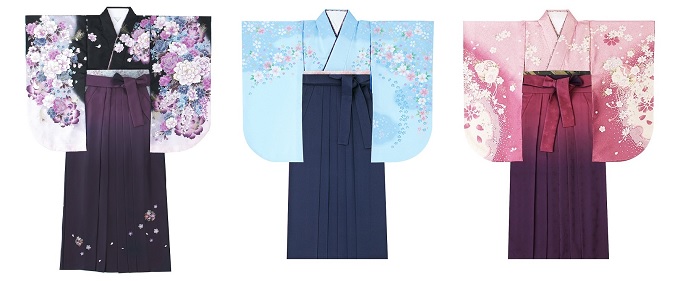
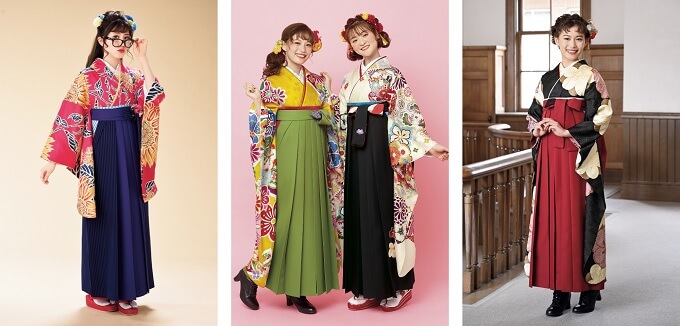
Hakama is a classic graduation attire!
The hakama is a type of kimono worn from the waist down. It is put on after the kimono has been worn, with the hem of the kimono tucked up. It is equivalent to pants or a skirt in Western clothing. It consists of front and back panels, and is worn by tying the cord sewn into the top of the hakama around the waist.
The history of the hakama dates back a long time, with its origins believed to have emerged during the Kofun period(from about 300 to 538). Hakama from that era were loose from the waist to just above the knees and tapered tightly below the knees. From then until the Heian period(from 794 to 1185), the notion that "hakama are for men" persisted.
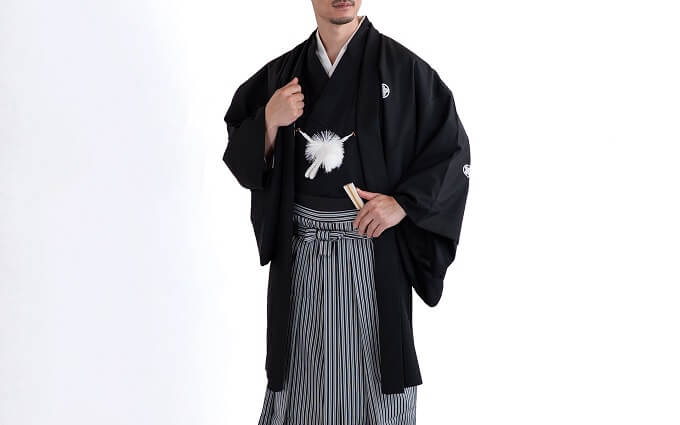
However, while hakama were everyday wear for men during the Kofun period, they became formal attire by the Heian period. Since then, hakama have continued to be worn as formal attire for men, and today, black mon-tsuki hakama are considered the highest-ranking formal attire for men in traditional Japanese clothing.
Women began wearing hakama around the Heian period. At that time, they wore hakama as undergarments beneath the ju-ni-hitoe, the formal attire for women. From then until the Kamakura period(from 1185 to 1333), hakama became widespread among women living in the imperial court.
However, once the trend subsided, opportunities for women to wear hakama gradually diminished. During the Edo period(from 1603 to 1868), clothing was strictly regulated according to social class, and women were actually prohibited from wearing hakama.
Women began wearing hakama again around the Meiji era(from 1868 to 1912). The reason was that the government adopted the hakama as the uniform for female students. It is said that the hakama allowed for easier movement than traditional kimonos and obi sashes, while also conveying an impression of beauty and formality. From the Meiji to the Taisho eras, this "female student = hakama" style became firmly established.
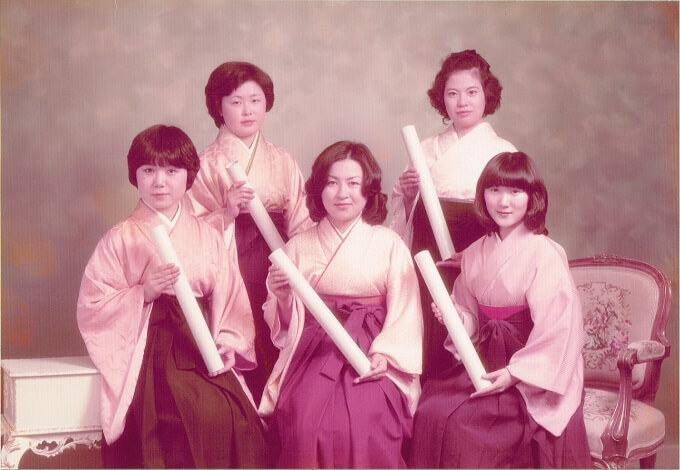
However, at that time, it was still rare for women to attend girls' high schools. Female students were, so to speak, "the select few women who had received higher education." The sight of female students wearing hakama as they went to school was the aspiration of ordinary women. As a result, the image of "women in hakama = a symbol of educated women" took root, and even today, hakama has become the standard attire for women at graduation ceremonies.
Over the course of this long history, hakama have been crafted in various forms. Today, there are generally two main types: the andon-bakama and the umanori-bakama. The andon-bakama is a relatively new, skirt-like style of hakama that originated around the Meiji era. It is the most widely worn style today. It is used in ceremonies such as graduation ceremonies and is also sometimes worn with zazen robes.
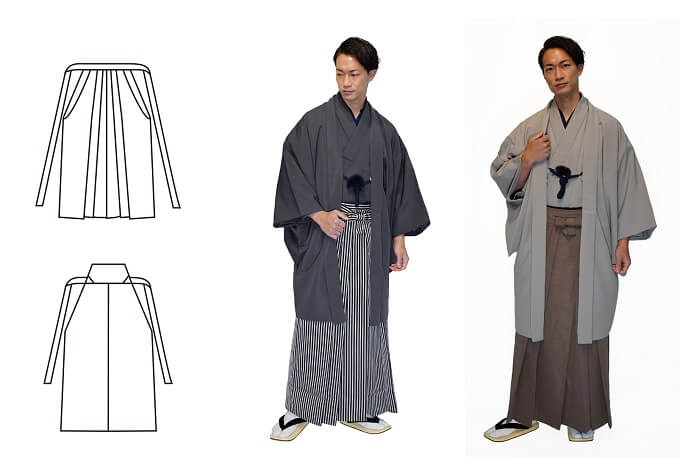
The umanori-hakama is pants-like hakama with a central divider that was once popular among samurai. The term "umanori" means "to ride a horse" or "a person who rides a horse" in Japanese. Today, in addition to being worn as formal attire at weddings, it is also used in shrine maiden costumes. Because it allows for easier movement than the andon-hakama, it is also worn as part of the uniform for traditional Japanese martial sports like kendo and aikido.
Although it can be worn for kendo or aikido, in Japan, the hakama is most commonly associated with graduation ceremonies. When women wear a hakama to a graduation ceremony, it is customary to pair it with a furisode on the upper body.
A furisode is a kimono with long sleeves and a decorative cuff (tamoto); it comes in three sizes—large, medium, and small—depending on the sleeve length. While zori sandals or pokkuri clogs are the traditional footwear, many people have recently started wearing boots.
Pairing a hakama with zori or pokkuri clogs creates an elegant look. They're easy to put on and take off even while wearing a kimono, so you don't have to worry about your kimono becoming disheveled. Another appealing feature is their versatility—they go well with kimonos of any color or pattern. Pokkuri clogs can also make you appear taller. Pairing hakama with boots creates a retro and stylish look. The main advantage is that they're easier to walk in than zori or pokkuri clogs. Choosing boots with high heels can make you appear taller.
If you want to wear a hakama in Japan, you can rent one from a shop specializing in traditional Japanese clothing. At shops in tourist areas, you may be able to walk around town or take photos while wearing a hakama.
 Opening Lake
 April Fool's day
 Hanami
 Baseball