
Chahitsu(Chabitsu)
Isn't the chahitsu dying out these days?
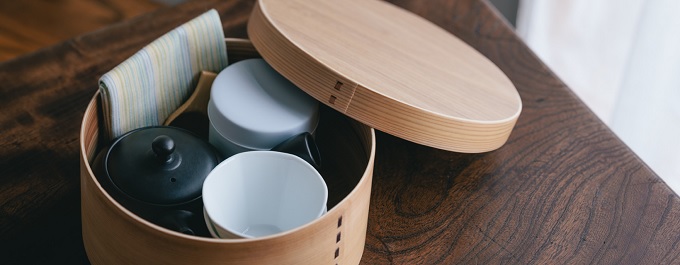
The "chahitsu" (or "chabitsu") is a lidded container used to store a complete set of sencha tea tools. It is used to store items such as a teapot, tea caddy, teacups, and saucers, and the lid can also be used as a tray. Originally, the term "hitsu" referred to any large wooden box with a lid; the "hitsu" in "ohitsu" (a container for cooked rice) has a similar meaning.
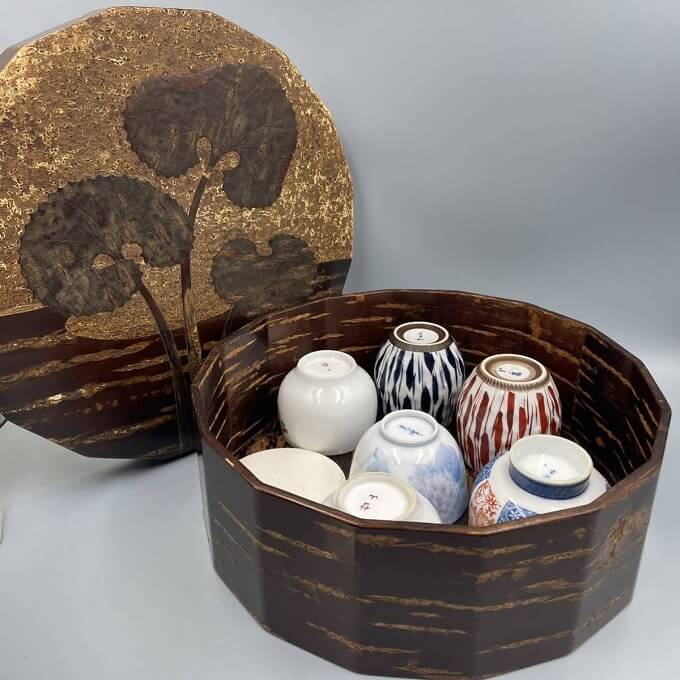
The chahitsu is traditionally made of wood, but in recent years, plastic versions have become more common. At the same time, lacquered wooden chahitsu are still available for purchase. Although they have become increasingly rare, there are luxurious chahitsu featuring Wajima-nuri or Aizu-nuri lacquerwork that cost over $500. Furthermore, there are high-end chahitsu crafted by hollowing out a single giant tree that is over 100 years old.
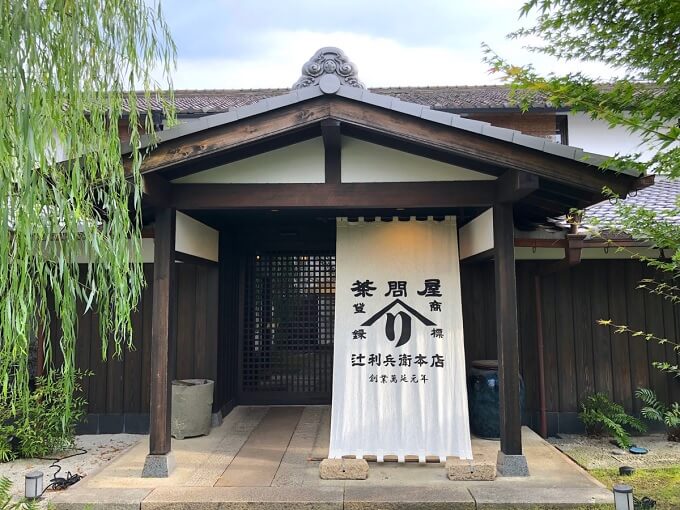
The history of the chahitsu dates back many years; it is said to have been invented by Tsuji Riemon during the late Edo period(from 1603 to 1867) through the Meiji era. Tsuji Riemon was the founder of "Tsujiri," a long-established Kyoto-based company specializing in the production and sale of Uji tea.
Finding it inconvenient to transport a full set of tea utensils in a jar, he created the chahitsu to make them easier to carry and to better preserve their condition. Later, as common people began to casually enjoy sencha at home, the chahitsu also became widespread and popular among the general public.
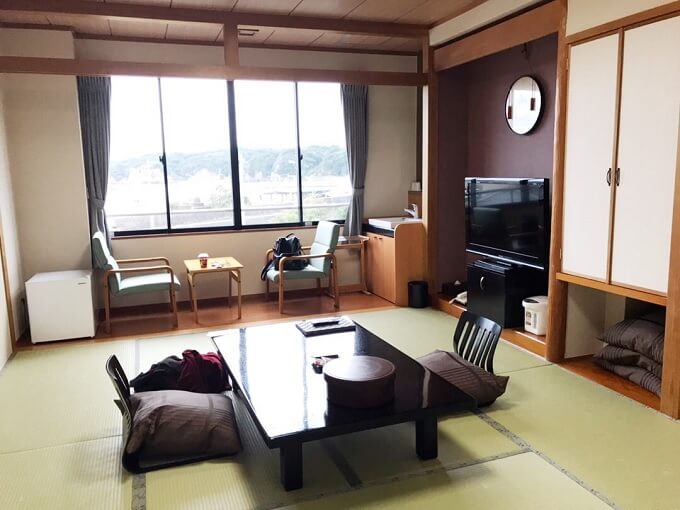
Until around the Showa era, every Japanese household had at least one chahitsu, which was usually placed next to the low dining table called chabudai. However, it is now disappearing from many Japanese homes. This is because other beverages, such as coffee, have become widespread, and people drink sencha less frequently in their daily lives. The popularity of bottled tea has also played a significant role. That said, you can still occasionally spot a chahitsu in older guesthouses and some Japanese-style inns.
Although chahitsu are rarely seen these days, they still have their advantages. Because they contain a complete set of sencha tea utensils, you don't have to leave your seat while brewing tea. You can start and finish serving tea right where you are. The chahitsu is an ideal tool for Japanese people, who tend to live in smaller homes than those in the West. Even today, at some traditional inns, the staff will still brew tea for you using a chahitsu set.
Another advantage of a chahitsu is that it prevents the tea from absorbing odors from other items. Japanese tea leaves are delicate and easily absorb odors. Therefore, if they are stored alongside items with strong scents, their delicate aroma will be lost. In this regard, keeping only the tea leaves and tea utensils in a chahitsu helps preserve their aroma.
In Japan, chahitsu are sold at Japanese tableware shops and specialty tea ware stores. While they are sometimes available at department stores, they are not commonly seen these days. It is not unheard of to find plastic chahitsu sold at large home goods stores such as Nitori and Loft.
 Opening Lake
 April Fool's day
 Hanami
 Baseball