
Dotera
Is the dotera still worn today?
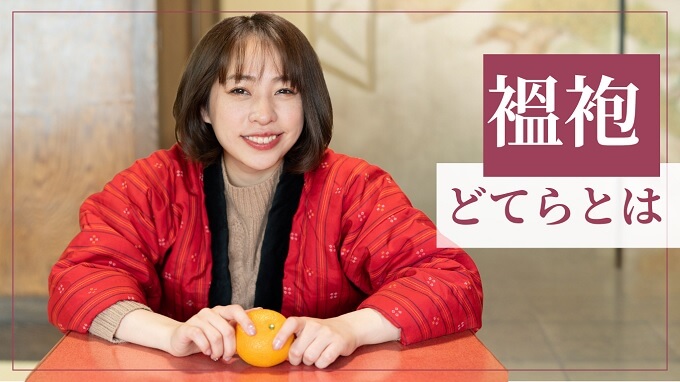
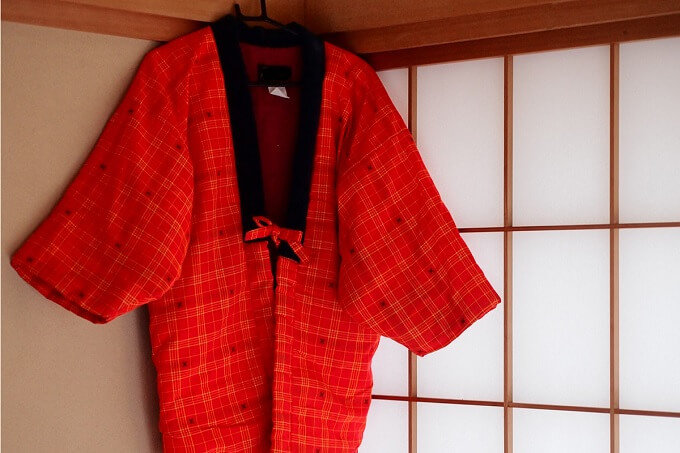
The "dotera" is a type of winter garment worn over traditional Japanese clothing after bathing, either at a ryokan or at home. It became popular among samurai during the Edo period(from 1603 to 1868), spread to the general public, and remains in use today.
The dotera is also known as a "tanzen," a name derived from the "tanzen-buro" (a type of public bathhouse) that was popular during the Edo period. It is particularly common to refer to it as a "tanzen" in the Kansai region, including Osaka and Kyoto.
In the past, traditional inns always provided doteras to be worn over yukata in the winter, but today they are offered only at a few select inns. Although it is no longer commonly worn as everyday clothing, it remains popular in the harsh winters of the Tohoku region and Hokkaido.
Additionally, the dotera can be used as a blanket. Known as a "kaimaki futon," if you flip the dotera inside out, slip your arms through the sleeves, and use it as a blanket, it completely covers your neck and shoulders, allowing you to sleep very warmly.
The dotera is designed to be larger than a standard kimono for ease of wear and is characterized by its cotton padding. It features wide sleeves for comfort and is fastened with a cord or a decorative sash.
The outer fabric of it is often made of the same silk used for kimonos and typically features a striped pattern. The lining is usually made of soft, navy-blue cotton. However, in recent years, inexpensive and durable wool fabric has also become popular.
Another characteristic of the dotera is the black collar. Even as the striped patterns on the outer fabric have become more varied, the collar is still often black. While the sleeve design used to differ between men and women due to differences in body shape, unisex versions are now available.
Other garments often mistaken for the dotera include the hanten and the chanchanko. Like the dotera, the hanten is a type of winter clothing for the common people that has been worn since the Edo period. However, unlike the dotera, the sleeves are only about half the standard length, and it is also used as workwear during the winter.
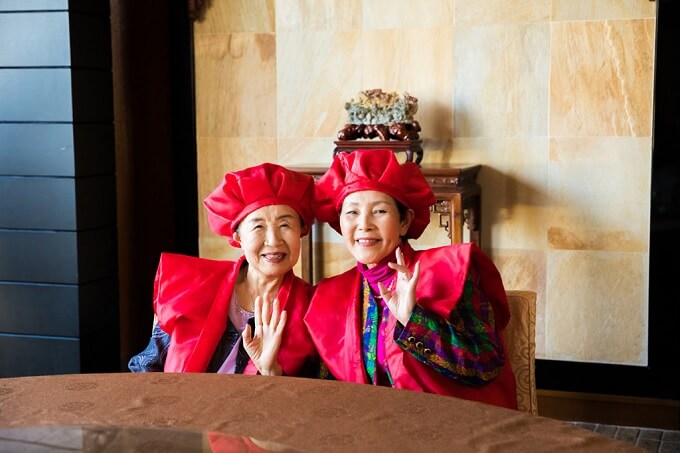
The chanchanko typically has no sleeves and is often unpadded. It is a well-known tradition to wear a red chanchanko when celebrating one's 60th birthday. In cold regions, it is also used as winter clothing for children.
In Japan, dotera are mainly sold at specialty kimono shops. They can also be found at department stores and shops in tourist areas of colder regions. In winter, it's not uncommon to find modernized versions sold at fast-fashion stores.
 Opening Lake
 April Fool's day
 Hanami
 Baseball