
- Top
- Entertainment
- Yukinari Sugawara's early life and childhood
Yukinari Sugawara's early life, childhood and career in Japan
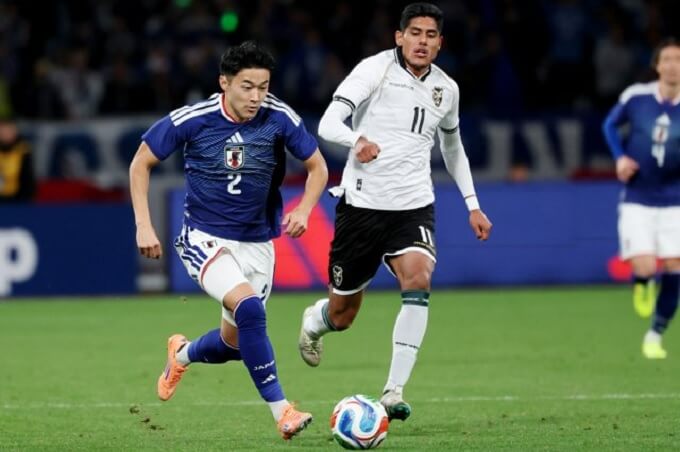
The U-17 World Cup was the turning point for Yukinari!
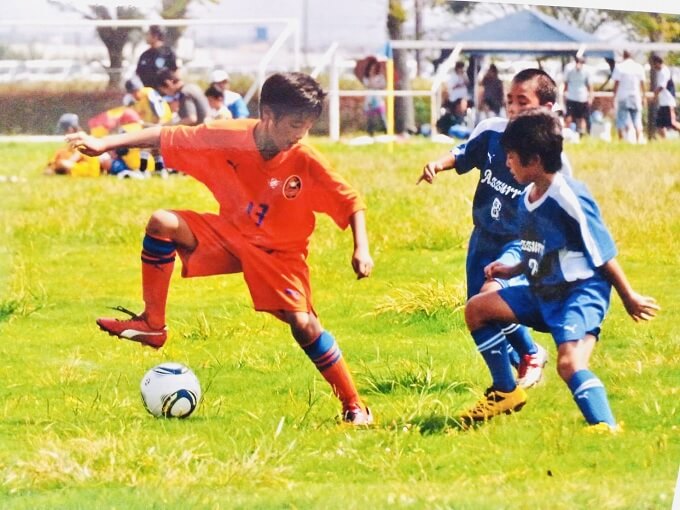
Yukinari Sugawara(菅原 由勢 in kanji) was born on June 28, 2000, in Toyokawa City, Aichi Prefecture. He started playing soccer when he was in preschool, after a close friend invited him to join. He began playing with childlike enthusiasm and enjoyed it so much that he would keep kicking the ball in the neighborhood park until dusk. When he entered elementary school, he joined the local soccer club, "AS. Laranja Toyokawa."
Coach Miyazawa of the club recalled, "When I saw him kicking the ball in the park, I thought his talent was head and shoulders above the rest. He was a kid who could take shots at crucial moments and put his body on the line in defense." His play caught the attention of his teammates and coaches.
However, since the soccer club at the time was made up mainly of middle school students, he didn't get to play in official matches until he was in the fourth grade. As soon as he made his official debut in fourth grade, though, he became a key player on the team. His team swept all the local tournaments and went on to finish as runners-up in the prefectural tournament. Coach Miyazawa said, "Even when Yukinari said, 'I want to play for a famous club,' it didn't sound like a child's pipe dream. I had a feeling that it would naturally come to pass."
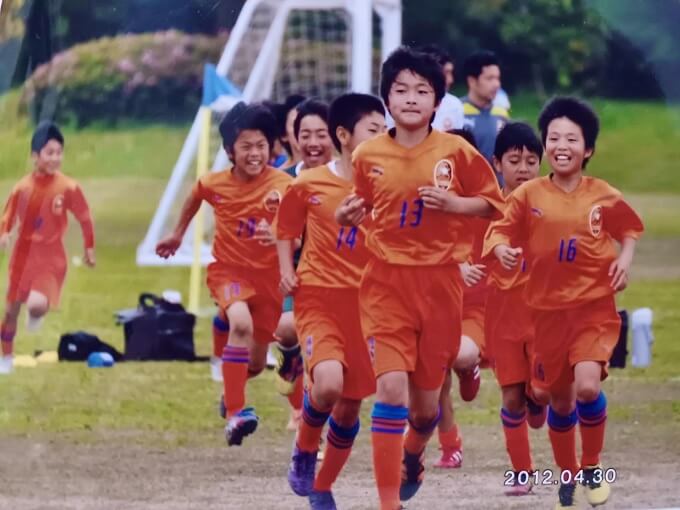
When he entered junior high school, he wanted to play soccer at a higher level, so he tried out for the Nagoya Grampus U-15 team. He passed the tryouts and joined the Nagoya Grampus youth team during his junior high school years.
Looking back on his first year of junior high school, he said, "The moment I joined the Nagoya Grampus youth team, I made up my mind that I was going to make a living playing soccer. I made various choices every day, and of course, there were things I had to sacrifice. I was fully prepared for the fact that everything depended on my own ability."
Even back then, he was well aware that his parents had sacrificed sleep and their own time off to drive him to and from practice and games and cheer him on. He also held a deep sense of gratitude toward his older brother and sister, who warmly supported his younger brother's endeavors. At the age of 13, he thought, "My family must be under a lot of stress because of me. This isn't just my life. The future of this family depends on my soccer."
With unwavering determination, he focused on his daily soccer training and was selected for the U-15 Japanese national team at the age of 15, while in his third year of junior high school. After graduating from junior high, he attended his local high school, Tokai Gakuen High School, and trained hard with his club team. He made his professional debut at the age of 17, and his start in the J1 League opener at 17 years, 7 months, and 27 days set the second-youngest record in history.
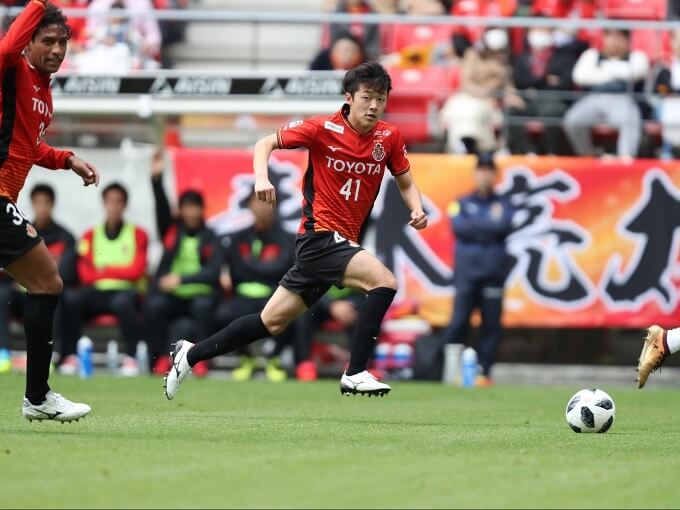
While playing in professional matches in Japan, he also represented Japan at the U-17 World Cup in India. At that tournament, he keenly felt the gap between himself and world-class players. In particular, the match against England in the first round of the knockout stage had a profound impact on him.
The England national team's starting lineup at the time featured talented players such as midfielder Phil Foden and defender Mark Gueye (both of whom play for Manchester City as of 2026). As a result, England was widely regarded as the strongest team in the tournament. Before their match against England, the Japanese players and staff went to the stadium to watch England's group stage match. Reflecting on England's decisive victory—achieved largely with a reserve squad—then-manager Moriyama said, "I thought we couldn't win; they were too strong. I felt like I shouldn't have watched it."
In the meeting that followed, the team discussed how to take on England, a vastly superior opponent, but a sense of despair hung in the air. That's when Yukinari said, "Let's go back to our roots." With those words, the Japanese national team decided not to wait for the opponent to make a mistake, but to confront them with an aggressive defensive strategy focused on winning the ball. Alongside Yukinari, the Japanese starting lineup featured key players who form the core of the current national team, including midfielder Takefusa Kubo (Real Sociedad) and midfielder Keito Nakamura (Stade de Reims).
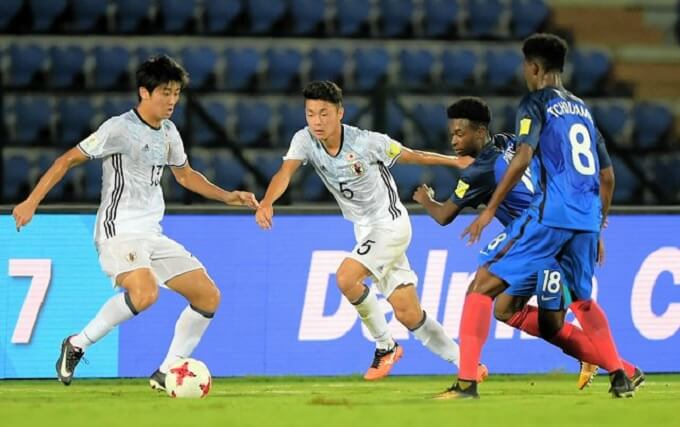
However, in the actual match, England dominated possession for most of the game, and the Japanese national team was constantly pinned back in their own half. Even under such pressure, Yukinari blocked an opponent's shot with a sliding tackle and collided fiercely with a speedy attacker. He consistently nipped attacks in the bud and protected the goal. The score remained 0–0 after 90 minutes, and although the Japanese national team managed to force the game into a penalty shootout, they ultimately lost.
England went on to win the U-17 World Cup. Although the Japanese national team, which had pushed England to a penalty shootout, was widely praised for putting up a valiant fight, Yukinari felt differently. In an interview, he said, "I realized this is the world-class level. They're fast, skilled, and strong. I couldn't believe they were the same age as us." However, during a team meeting after the loss to England, he said through tears, "Let's all get our revenge on the world."
That match sparked his interest in playing abroad, and in 2019, at the age of 18, he transferred to AZ Alkmaar in the Netherlands. In 2020, he was selected for the Japanese national team, and subsequently transferred to Southampton in the Premier League. As of 2026, he plays for Werder Bremen in Germany.
sources
- Kaishu Sano's early life
- Yukinari Sugawara's early life
- Shuto Machino's early life
- Hidemasa Morita's early life
- Ko Itakura's early life
- Kota Takai's early life
- Ao Tanaka's early life
- Ayase Ueda's early life
- Daizen Maeda's early life
- Daichi Kamada's early life
- Kaoru Mitoma's early life
- Reo Hatate's early life
- Ritsu Doan's early life
- Takefusa Kubo's early life
- Takehiro Tomiyasu's early life
- Takumi Minamino's early life
- Wataru Endo's early life
