
- Top
- Entertainment
- Ko Itakura's early life and childhood
Ko Itakura's early life, childhood and career in Japan
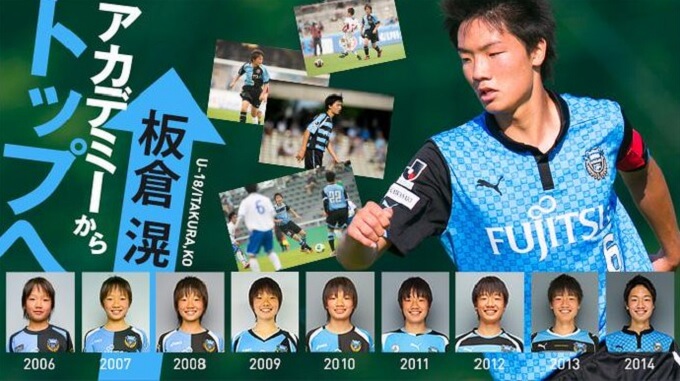
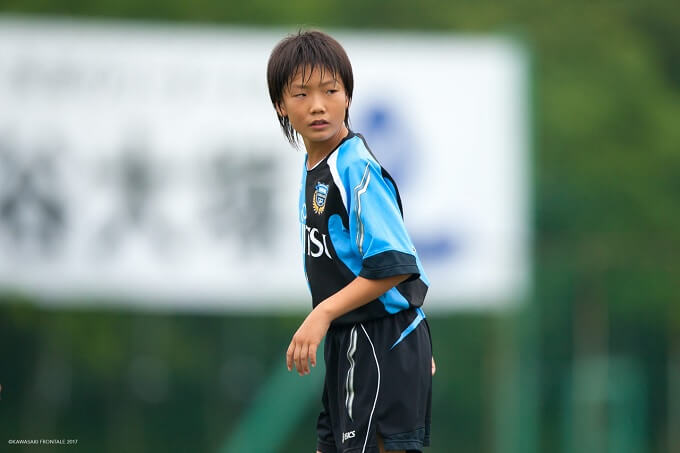
Ko came up through the local team's academy!
Ko Itakura(板倉 滉 in kanji) was born on January 27, 1997, in Yokohama, Kanagawa Prefecture. He spent his early childhood in the Kansai region, living near Hanshin Koshien Stadium, the home field of the Hanshin Tigers. His parents gave him a toy glove when he was one, a leather glove when he was three, and a wooden bat when he was four, and he became completely absorbed in baseball.
When he started elementary school, he moved back to Kanagawa Prefecture. In first grade, he participated in a soccer tournament as part of a school event. The participation prize he received included a recruitment flyer from a soccer team that read, "Come play soccer with us." He decided to try attending a practice session, and he was hooked on soccer.
After that, Ko devoted himself to soccer training with local clubs such as Saginuma SC and Azamino FC. At the time, he played attacking positions such as forward. Even now that he's a professional, traces of that past can still be seen in his attacking runs and shots—which make it hard to believe he plays a defensive position. In matches for the lower-grade division (for first through third graders), he once scored two goals in a single game despite being only in second grade.
One day, while he was hard at work practicing soccer, Ko received a flyer at school inviting him to "go see a Kawasaki Frontale match." When he went to Todoroki Athletics Stadium with his family just to check it out, he was captivated by the professional soccer players' performance. After that, he frequently attended Kawasaki Frontale's home games and even visited their training grounds to get autographs from the players. He grew to love Kawasaki Frontale so much that there's even a story about him lining up before the gates opened just to watch the games.
Then, in the fourth grade, Ko took part in tryouts for the youth team of his favorite club, Kawasaki Frontale. During the tryout matches, he scored more goals than anyone else and became a member of the first cohort of the youth team. He joined the Kawasaki Frontale U-12 team as a forward, where he met Coach Takasaki, who would become his mentor.
Ko spoke about that time: "I joined the team in fourth grade, and Coach Takasaki taught me so many things. He was strict not only about soccer but also about my personal life. I feel that's where a sense of independence began to take root within me. That has definitely carried over to where I am today."
Through his encounter with Mr. Takasaki, Ko grew significantly as a player. Unlike before, he honed his skills through drills focused on improving his ball control, such as carrying the ball forward and practicing juggling. These training sessions laid the foundation for his playing style. Furthermore, at Mr. Takasaki's suggestion, he trained not only as a forward but also as a defensive midfielder and center back.
Ko, who began playing as a defensive midfielder and center back, competed in the Danone Nations Cup—a tournament where the world's best elementary school teams compete for the title—during his sixth-grade year. This tournament strengthened his desire to play on the world stage and turn professional. He went on to smoothly advance to the U-15 team at Kawasaki Frontale, where he honed his skills alongside teammates such as Koji Miyoshi (VfL Bochum), who was in the same grade, and Kaoru Mitoma (Brighton), who was a year younger.
Ko was on track to smoothly climb the ladder to becoming a professional, but a difficult period awaited him during his junior high school years. His physical development was slow, and as his peers surpassed him in stature, he was no longer able to play in matches. While he grew anxious about not being able to keep up with his peers' growth, his desire to hang out with friends grew stronger, and his passion for soccer gradually faded. Realizing this, one day in his first year of junior high, he went to his coach and said, "I want to quit soccer." However, his coach talked him out of it, and he went to practice the very next day.
Reflecting on that time, he said, "The day after I said I wanted to quit, I went to practice as usual. I probably felt bad about letting my parents down. And I think I still had that desire to become a pro and play soccer at Todoroki Stadium. I think it was precisely because I had that desire deep down that I was able to keep going without quitting."
Although Ko ultimately decided not to quit soccer, his three years of junior high school were far from easy. Even in the Takamado Cup All-Japan Soccer Championship, the final tournament of his junior high school career, he barely saw any playing time. Because of this, he assumed he wouldn't be promoted to the youth team (Kawasaki Frontale U-18). However, contrary to his expectations, the word he heard during his meeting with the team was "promotion." Perhaps the team recognized his hard work up to that point and was confident in his future growth.
After being promoted to the Kawasaki Frontale U-18 team, Ko shot up in height and quickly began to outpace his peers. He started playing in matches as a freshman and gradually became a key player for the team. By his sophomore year of high school, his combination of height and technical skill allowed him to play as a defensive midfielder. That year, he participated in the first-team training camp for the first time. Playing alongside the first-team players there further fueled his desire to turn pro. Then, shortly after entering his senior year of high school, his promotion to the first team was confirmed.
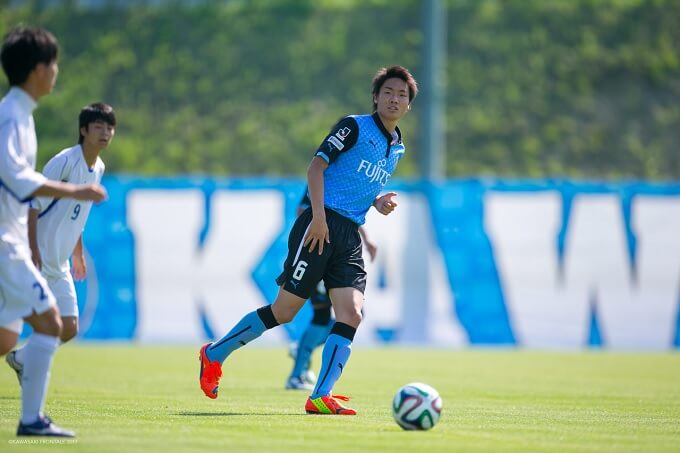
It was here that Ko achieved the goal he had dreamed of since elementary school: "becoming a pro with Kawasaki Frontale." And now that he had joined the professional ranks, he set his next goal: "to play on the pitch at Todoroki." He took on his first year with this new goal in mind, but the formidable barrier of "professionalism" stood in his way. He was stunned by the sheer difference in the quality of play. He felt a gap between himself and the senior players in front of him—a gap that seemed within reach yet remained just out of his grasp. Although there were times when he grew to hate practice, he believed he could do better and trained desperately every day.
Ko spent his first year training relentlessly to catch up to his seniors. However, on May 26 of his second year, it was suddenly decided that he would make his official debut and step onto the pitch at Todoroki for the first time. The day before the match, he was filled with nothing but anxiety, but by the time he stepped onto the field, that anxiety had vanished. This match served as a turning point, and he went on to appear in six official matches that year. It was a second year in which he gained both confidence and a sense of accomplishment.
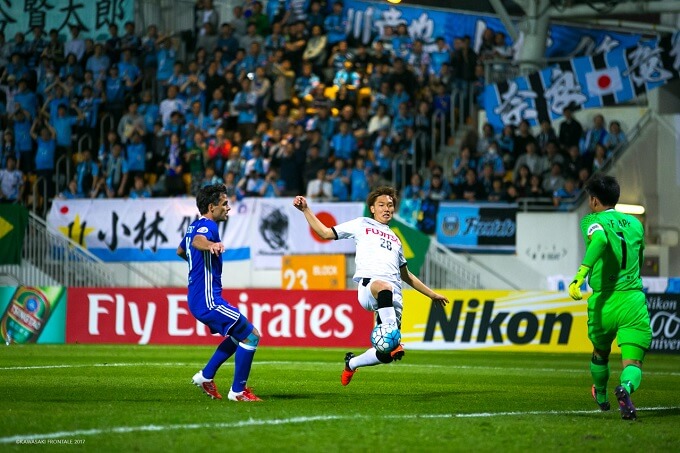
In his third professional season, Ko joined Vegalta Sendai on loan. He started in the season opener on February 25 and contributed to the victory by scoring his first J1 League goal. That year, he won the Most Improved Player (MIP) award, which is selected by fan vote. He subsequently moved to Manchester City in 2019 and went on to play for FC Groningen, Schalke, and Borussia Mönchengladbach. As of 2026, he plays for Ajax Amsterdam.
sources
- Kaishu Sano's early life
- Yukinari Sugawara's early life
- Shuto Machino's early life
- Hidemasa Morita's early life
- Ko Itakura's early life
- Kota Takai's early life
- Ao Tanaka's early life
- Ayase Ueda's early life
- Daizen Maeda's early life
- Daichi Kamada's early life
- Kaoru Mitoma's early life
- Reo Hatate's early life
- Ritsu Doan's early life
- Takefusa Kubo's early life
- Takehiro Tomiyasu's early life
- Takumi Minamino's early life
- Wataru Endo's early life
