
- Top
- Entertainment
- Hidemasa Morita's early life and childhood
Hidemasa Morita's early life, childhood and career in Japan
Hidemasa is not an elite player!
Hidemasa Morita(守田 英正 in kanji) was born on May 10, 1995, in Takatsuki City, Osaka Prefecture. Although his parents and older sister played tennis, he started playing soccer in kindergarten under the influence of his older brother, who was five years his senior. He spent every day kicking a ball around with his brother. Since his brother was five years older, he was essentially his brother's practice partner, but he loved soccer so much that he says playing with his brother was fun. He also enjoyed playing with friends outside of soccer, and because he would get wild and cause trouble, his parents scolded him all the time.
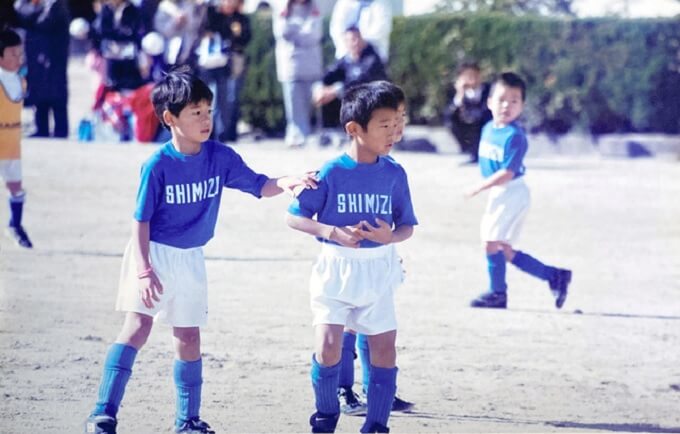
When Hidemasa entered elementary school, he joined his local team, Takatsuki Shimizu FC. He played as a defensive midfielder—the same position he holds today—but unlike now, he focused on an attacking style of play and was constantly running up and down the field. He says it was during his elementary school years that he first set his sights on becoming a professional soccer player. Reflecting on that time, he said, "I didn't know of any other career besides being a soccer player. I also thought there probably wasn't anything better than soccer. I just genuinely enjoyed it."
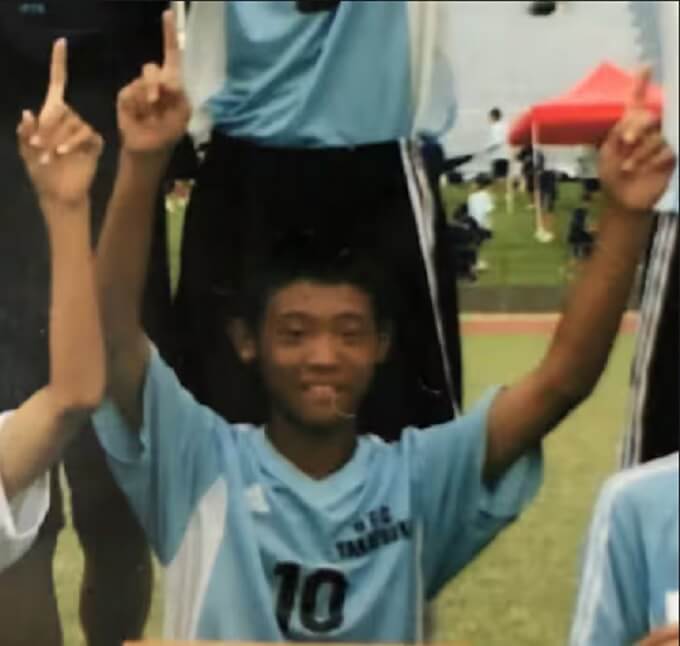
After graduating from elementary school, Hidemasa enrolled at Takatsuki Municipal Ninth Junior High School. He tried out for the Gamba Osaka Junior Youth team—a club he had long admired—but was not selected. Instead, he joined the soccer team at his junior high school, where his close older brother also played, and set his sights on the national tournament. The team's coach was passionate and deeply committed to the sport. Under his guidance, Hidemasa devoted himself entirely to soccer, attending daily morning practices and, on days when they lost a practice match, training until late at night.
Although the environment was tough, he never considered quitting soccer just because it was hard. Looking back, Hidemasa attributes much of this to the influence of his coach. "He was the kind of coach who made me want to keep going even when things got tough; I was drawn to his passion. Even though he was strict, he always made sure to communicate with us and provide support. He listened to our concerns outside of practice and even organized study sessions to help us prepare for school exams."
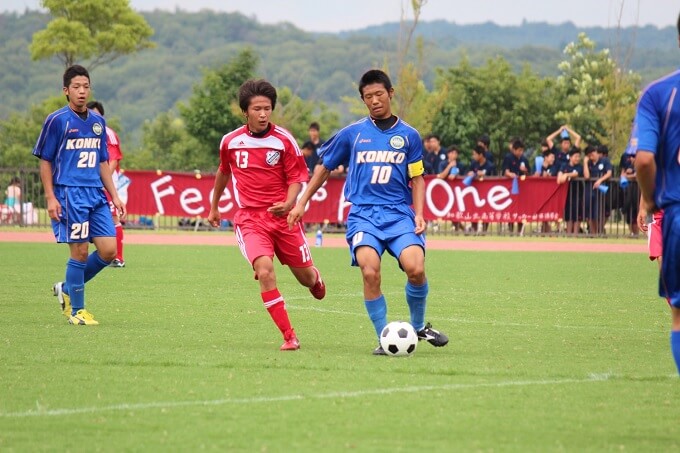
However, because he had enjoyed such fulfilling days in junior high school, he ended up having a difficult time at Konko Osaka High School, where he went on to study. Perhaps he was on the verge of burnout, having devoted himself too intensely to soccer during his three years of junior high. Furthermore, he hit a wall for the first time in high school, largely because many of his classmates came from club teams. According to Coach Iwamatsu, who coached him during his high school years, he was merely a player who was slightly above average when he first entered the school.
Mr. Iwamatsu said, "His ball-handling skills were just a little better than average; he wasn't at a level where he could go pro. However, Hidemasa worked steadily and consistently, refusing to be outdone by his classmates who came from club teams. Plus, he could run like crazy. He was among the top runners not just in his grade but in the entire school, even surpassing the track and field team. I've been watching the soccer team for about 30 years, and he's definitely top-class."
His relentless effort and running ability were recognized, and he had been playing in matches since his freshman year of high school, but ultimately, he was unable to qualify for the national tournament during his three years of high school. Naturally, he was not selected for the high school soccer all-star team or the Japanese national youth teams. Even so, he says he never once thought it was impossible to turn pro. It wasn't that he had absolute confidence, but giving up was simply not an option.
Speaking about that time, Hidemasa said, "I never thought becoming a pro was impossible. I believed that if I kept at it, I would eventually get there. Even when I thought it was difficult, I never thought it was impossible. I don't know why that was. I kept telling my parents I could do it, but they were more realistic than I was and told me it was impossible. Even so, I didn't give up."
Having seriously considered becoming a professional soccer player, Hidemasa decided to enroll at Ryutsu Keizai University after graduating from high school. He believed that if he wanted to turn pro, he had to attend a university with a strong tradition of producing professional players. Another factor was the significant impact he felt when facing Ryutsu Keizai University's affiliated high school during his sophomore year of high school. He said he was stunned by his classmates' performance in that game and thought they were simply too strong. When he heard that those players would be moving up to the university, he decided he wanted to play soccer with them.
Playing soccer in college was a new challenge for Hidemasa. He didn't receive a sports scholarship; instead, he entered after passing tryouts and left his hometown of Osaka behind. He later recalled that once he entered college, "I couldn't get enough of soccer." Being surrounded by players far more skilled than himself served as a source of inspiration, which he channeled into his own strength. While countless players around him were losing their drive, he immersed himself in soccer during his college years. He also felt a sense of tension and urgency, knowing that if he couldn't produce results in college, a professional career would be out of the question.
However, his soccer career hadn't exactly been smooth sailing since his freshman year in college. Although he made the varsity team as a freshman, he barely played in any official matches. Knowing he wouldn't get much playing time, he spent a lot of time working out during his sophomore year to build up his physique.
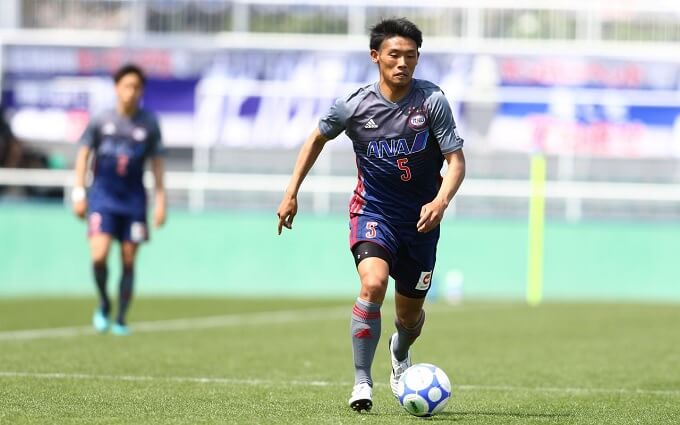
In addition to his physical transformation, another turning point was the way he redefined his role as a defensive midfielder. He had played in that position since elementary school, but up until then, he had been an attack-minded player who believed that a defensive midfielder's job was to orchestrate the team's play and direct his teammates. However, that approach didn't work in college. He wasn't getting playing time because he couldn't make decisive plays on offense and his defensive contributions were minimal. He made a conscious decision to shift his mindset, choosing to prioritize defense over offense.
Hidemasa spoke about this decision: "The coach told me, 'You can't deliver the final pass on offense, you can't take shots, and you can't make the decisive plays.' That had always been a weakness for me, too. So I started thinking about how I could make a name for myself as a defensive midfielder. That's when I realized I could become the kind of defensive midfielder who wins balls back and delivers the pass just before the final one—a real ball-winner, if I will. Once I started thinking that way, I began to focus more on defense and decided to market myself as that kind of player."
Gradually, the results began to show. Although he says, "I don't even know exactly when I started being able to do it," he explains that by the time he realized it, he was able to win the ball, and he found it increasingly enjoyable. He evolved from an attack-minded defensive midfielder to a defensive-minded one, establishing himself as a key player at the university. In his senior year, he won the All-Japan University Soccer Championship, was named the tournament's Most Valuable Player, and had grown into the top defensive midfielder in the country.
By that time, he had begun receiving offers from professional clubs. After considering several options, he ultimately chose Kawasaki Frontale. The reason he chose Kawasaki Frontale was that they recognized his ability to play not only as a defensive midfielder but also as a fullback or center back. His versatility was his strength; he could step in seamlessly whenever someone got injured. Frontale understood this.
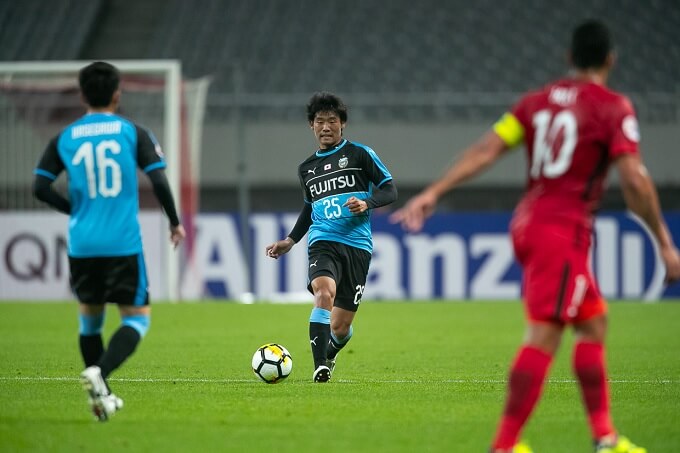
After joining Kawasaki Frontale, Hidemasa impressed during the preseason training camp, made a substitute appearance in the FUJI XEROX SUPER CUP, and made his professional debut in his first official match. He started for the first time in the second round of the AFC Champions League, displaying energetic play from the opening whistle. Despite being in his rookie season, he secured the defensive midfield position and continued to feature in matches. In 2018, he was called up to the Japan national team while still in his first year as a professional. He made his debut for the Japanese national team in the 37th minute of the second half of the match against Costa Rica on September 11.
Regarding this, Coach Nakano, who coached Hidemasa at the university, said: "I am extremely pleased that he has made the Japanese national team. He is not what you would call an 'elite' player; he was never selected for any of the national youth teams, and he had no national-level achievements until his high school days. He threw himself wholeheartedly into Ryutsu Keizai University, worked hard every day, turned pro, and made the national team. He is an inspiring example for younger players. He has shown that even if you don't turn pro right after high school, you can still go through college, become a pro, and play in the World Cup."
Hidemasa continued to play a key role for Kawasaki Frontale in 2020 and was named to the J.League Best Eleven for the first time in his career. On January 8, 2021, he transferred to CD Santa Clara of the Primeira Liga. As of 2026, he plays for Sporting CP.
sources
- Kaishu Sano's early life
- Yukinari Sugawara's early life
- Shuto Machino's early life
- Hidemasa Morita's early life
- Ko Itakura's early life
- Kota Takai's early life
- Ao Tanaka's early life
- Ayase Ueda's early life
- Daizen Maeda's early life
- Daichi Kamada's early life
- Kaoru Mitoma's early life
- Reo Hatate's early life
- Ritsu Doan's early life
- Takefusa Kubo's early life
- Takehiro Tomiyasu's early life
- Takumi Minamino's early life
- Wataru Endo's early life
