
- Top
- Entertainment
- Kazuma Okamoto's early life and NPB career
Kazuma Okamoto's early life, childhood and career in Japan
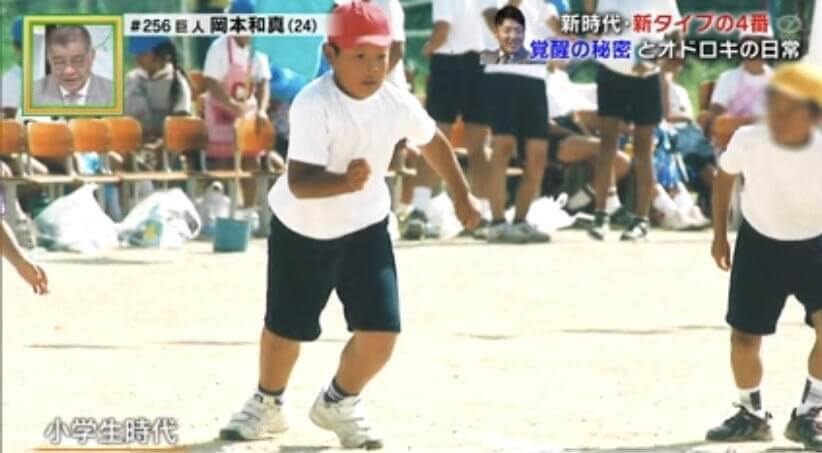
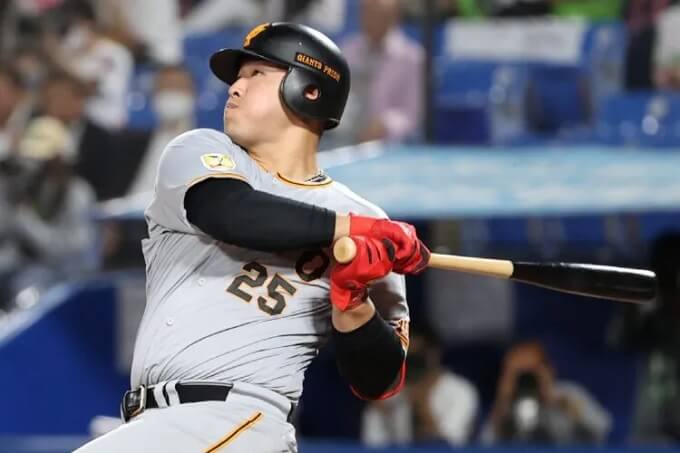
Kazuma had been training his hand-eye coordination since childhood!
Okamoto Kazuma(岡本和真 in kanji) was born on June 30, 1996, in Gojo City, Nara Prefecture, Japan. His parents named him "Kazuma," hoping he would cherish harmony(和) with others and become a person at the center(真ん中) of that harmony.
From the moment he became aware of his surroundings, Kazuma played with bats and gloves, growing up strong and healthy. His father had no baseball experience, having only been on the track team until junior high, and his mother also had no particular sports background. However, by first grade, he had grown tall enough to wear size 5-foot clothing.
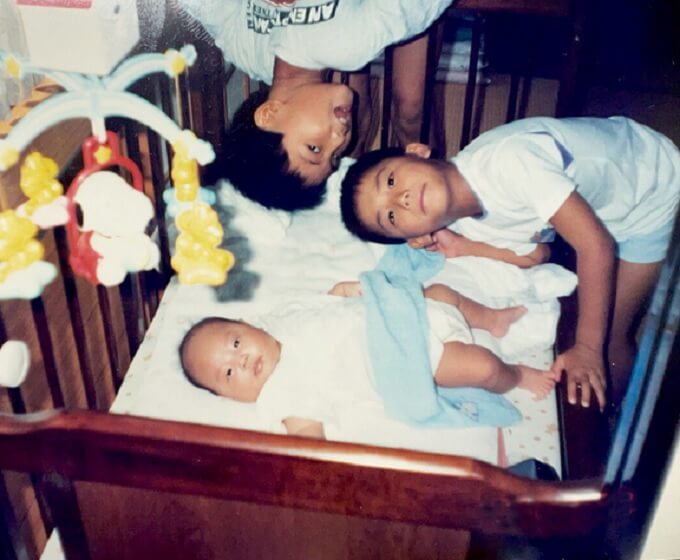
Kazuma started playing baseball with a club team in first grade because his two older brothers played. He dominated his classmates not only physically but also with his baseball skills, hitting his first home run in a tournament during second grade. When his father dangled the carrot, saying, "If you hit another home run, I'll buy you a new bat," he responded with a running home run. He continued to hit extra-base hits in succession, and despite being younger, was entrusted with the cleanup spot in the third grade. People around him called him the "Super Third Grader."
Kazuma displayed extraordinary talent as a pitcher, throwing a fastball that peaked at 62 mph by third grade. At elementary school tournaments, a catcher a year older than him even complained, "I don't want to catch a ball that fast." From that time on, he aspired to enroll at Chiben Gakuen, a local powerhouse baseball school. "When I get to high school, I'll go to Koshien and stand on the mound for the championship game," was his constant refrain.
Moreover, his hobby of fishing played a key role in helping him develop his talent as a power hitter. Starting in elementary school, he visited the pond near his home almost every day. Whenever he hit a slump in baseball, he would cast his line, focus, and repeatedly regain his form. He has said about fishing, "It helps me clear my head and also connects to my concentration at the batter's box."
Kazuma joined the Kashihara Shiki Senior team when he entered junior high school, playing both pitcher and third baseman. During his junior high years, apart from team practice, he made it a daily routine to take nearly 500 practice swings in his home's Japanese-style room. The section of tatami mat he used as his batting practice area became worn and tattered.
Furthermore, he didn't just swing the bat; he added a twist. It was toss batting where yellow sponge balls and sponge balls with pink painted on part of them came randomly. He practiced watching the ball's spin: if it was solid yellow, he'd take a full swing; if it had pink mixed in, he'd let it go. This practice became the foundation for developing his exceptional dynamic visual acuity.
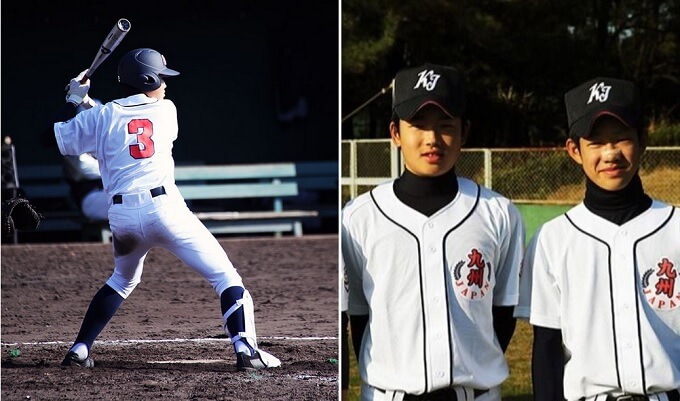
Even at the batting cage, he crushed 75-mph fastballs from two meters in front of the batter's box. It was all to fulfill his childhood dream: "Enroll at Chiben Gakuen and become a professional baseball player." That relentless effort evolved his natural talent. By his second year of junior high, he could hit home runs to the opposite field.
Kazuma recalled that time, saying, "Since I could hit home runs by pulling the ball, I deliberately aimed for home runs to the opposite field. Everyone thought it looked cool because they couldn't hit that way." Even in the Giants Cup tournament to determine the top junior high school team, which he played in as a second-year student, he repeatedly drove sharp hits to right field. He excelled over four games, going 7-for-12 at the bat.
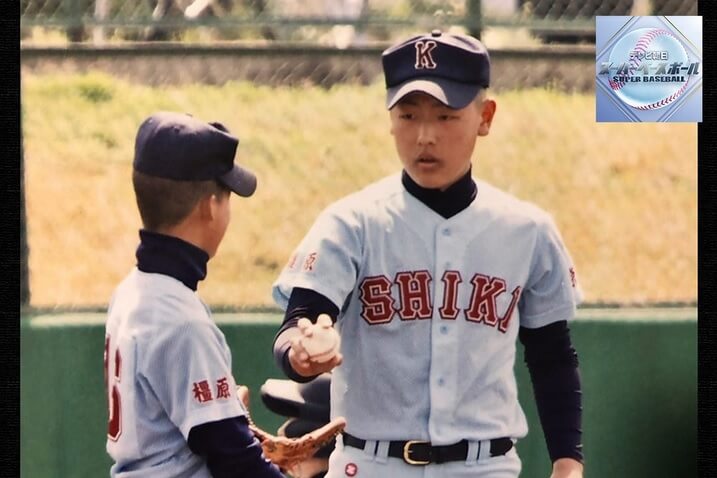
In his third year of junior high school, Kazuma was selected for the U15 Japanese national team and competed in the U.S. National Championship. Despite suffering from a right elbow injury at the time, he posted a batting average over .500 and contributed to the team's championship victory. Before entering high school, he received offers from nationally renowned baseball powerhouse schools. However, he declined all offers without hesitation and decided to enroll at Chiben Gakuen High School—the school he had admired since childhood.
Upon entering high school, Kazuma's batting already stood out as exceptional on the team. What astonished his coach at the time, Mr. Kosaka, was the aforementioned ball hit to right field. As a right-handed batter, he had sent a pulled-like hit soaring into right field. Mr. Kosaka remarked that he had never seen a ball fly endlessly into right field like that before.
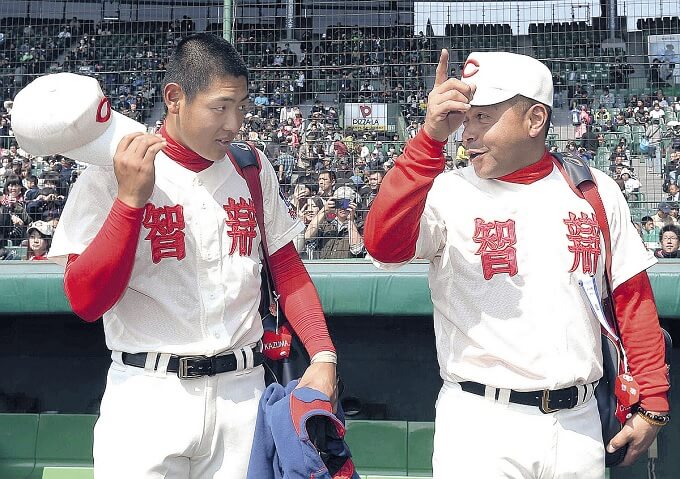
Mr. Kosaka worked closely with Kazuma to update his batting approach without destroying his natural talent. If he became a home run hitter capable of hitting to right field, pitchers would relentlessly attack the inside corner. Mr. Kosaka had him practice hitting without breaking his form, even when consciously targeted on the inside. At the same time, Mr. Kosaka saw that while his talent was undeniable, his personality showed a reserved and passive side. To overcome this, Mr. Kosaka placed him in the cleanup spot starting in his freshman year. He gave him the responsibility as the core of the lineup, hoping he would truly blossom as a slugger.
Furthermore, when he entered his third year, Mr. Kosaka told him to project an air of dignity in his everyday demeanor. Once Chiben Gakuen's national tournament appearance was confirmed, Mr. Kosaka told him, "Talk big in interviews. Don't say anything small—say something like, 'I'll hit it over the back screen at Koshien.'" Taking that advice, he stated in an interview, "I want to hit a home run over the back screen. I'll bat at least .500."
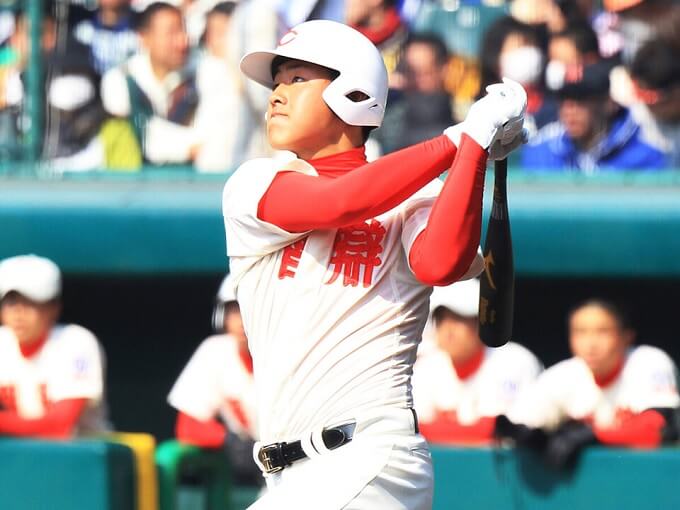
In his first game, Kazuma launched a spectacular home run over the back screen in his very first at-bat. He then hit another home run to left field in his third at-bat. Those two home runs in a single game remain a vivid memory, forever etched in Mr. Kosaka's mind. Mr. Kosaka got goosebumps at the moment of the home runs, thinking, "This kid is the real deal." Although Chiben Gakuen lost the next game, Kazuma delivered on his batting average promise too, going 4-for-8 over the two games.
Kazuma's 73 home runs in official games during high school were an impressive enough achievement to be considered the best of his generation. He was then selected by the Yomiuri Giants in the first round of the 2014 Professional Baseball Draft and signed a contract to join the team. Thanks to the dynamic vision training he had continued since junior high school, he set a new team record during the dynamic vision training portion of his rookie training after joining the team.
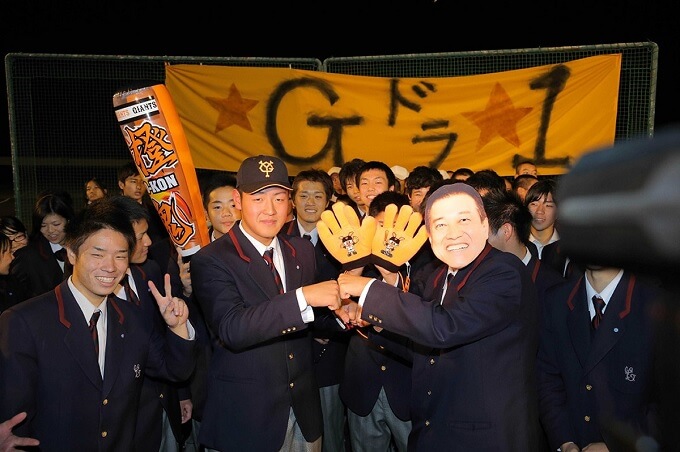
Kazuma played third base in Japanese minor league games from 2015 to 2017, but due to team circumstances, he also played first base and the outfield. Each time he was assigned multiple positions, he devoted significant time to defensive drills. Then, in 2018, after delivering results in spring training, he was named the opening day starter as the "sixth batter and first baseman." He ultimately played in every game, finishing with a .309 batting average, 33 home runs, and 100 RBIs. He became the youngest player in Japanese professional baseball history to achieve a "300 batting average, 30 home runs, 100 RBIs" season at age 22.
In 2019, he opened the season as the cleanup hitter and first baseman, ultimately finishing with a .265 batting average, 31 home runs, and 94 RBIs. That year, he also demonstrated his utility by playing 69 games at first base, 56 at third base, and 17 in left field as the starting fielder, adapting to the team's needs. At first base, he showed defensive stability with no errors.
In 2020, Kazuma recorded a .275 batting average, 31 home runs, and 97 RBIs, winning his first career home run and RBI titles. His defensive position, which had been rotated among multiple spots until the previous year, was fixed at third base for the entire season. In 2021, while his batting average dipped to .265, he hit a career-high 39 home runs and drove in 113 runs, winning the home run and RBI titles for the second consecutive year. That season, he started all 143 regular-season games as the starting third baseman and won the Gold Glove Award.
In 2022, he hit 30 home runs for the fifth consecutive year. In 2023, he batted .278 with 41 home runs and 93 RBIs, winning his third home run title in two years. His .958 OPS was the league's best and a career high. Defensively, he started the season primarily at third base but, due to team needs, played first base and left field for the first time in four years. Votes for him in the Best Nine awards that year were split: 50 votes for first baseman, 131 votes for third baseman, and 2 votes for outfielder. Consequently, he missed out on winning a Best Nine award.
In 2024, he fell short of 30 home runs for the seventh consecutive year, but recorded a .280 batting average, 27 home runs, and 83 RBIs. He earned his first Best Nine and Gold Glove awards at first base. In 2025, he was injured in a collision with a runner during a game on May 6th. He returned on August 16th and ultimately finished the season with a .327 batting average, 15 home runs, and 49 RBIs in 69 games played.
Following the conclusion of the 2025 season, the team approved Kazuma's pursuit of an MLB career. Procedures for his MLB transfer via the posting system commenced. On January 4, 2026, he signed a four-year contract with the Toronto Blue Jays, with his uniform number set as 7.
sources
- https://npb.jp/bis/players/11515130.html
- https://www.ntv.co.jp/baseball/articles/34asifqgq35tu5lpp5.html
- https://bunshun.jp/articles/-/11187
- https://news.1242.com/article/289493
- https://hochi.news/articles/20230715-OHT1T51308.html?page=1
- https://sportiva.shueisha.co.jp/clm/baseball/hs_other/2025/07/28/post_85/
- Shohei Ohtani's early life
- Shohei Ohtani's high school days
- Shohei Ohtani's NPB career
- Yoshinobu Yamamoto's early life
- Shota Imanaga's early life
- Seiya Suzuki's early life
- Kodai Senga's early life
- Yuki Matsui's early life
- Shintaro Fujinami's early life
- Shinnosuke Ogasawara's early life
- Roki Sasaki's early life
- Tomoyuki Sugano's early life
- Munetaka Murakami's early life
- Kazuma Okamoto's early life
- Tatsuya Imai's early life
